
Why a planned repair beats waiting
Most roof problems start small. A single slate slides out of line, a ridge tile loses its bedding, or a strip of lead lifts at the chimney. For a while nothing seems wrong indoors. Then a wet winter pushes water into the timbers, plaster stains appear and the job has grown from a morning's work into something far larger.
Repairing a fault while it is still minor is the cheapest way to look after a roof. It also lets the work be booked for a dry day, with the right materials ordered and safe access arranged, rather than squeezed in during a storm. That is why planned repairs make up so much of the work Swift Roofing does across Glasgow and Central Scotland.
Repairs we regularly carry out
Scottish roofs take a battering from wind-driven rain, frost and long damp spells. The same handful of weak points come up again and again, whether the building is a sandstone tenement, a 1930s semi or a modern detached house.
- Slipped, cracked or missing slates refixed or replaced
- Broken concrete or clay tiles swapped to match
- Ridge and hip tiles rebedded or mechanically fixed
- Lead flashings at chimneys, walls and dormers renewed
- Valley gutters cleared, repaired or relined
- Chimney pointing and flaunching attended to
Slate roofs need a careful hand
Many older Glasgow properties are finished in natural slate. Slate itself can last for generations, but the nails holding it rust through long before the stone wears out. When that happens, slates begin to slip one by one. A skilled repair uses slate hooks or copper tingles to secure replacements without disturbing the sound slates around them.
Where matching reclaimed slate is needed, it is sourced to suit the existing roof so the repair blends in. If a large section of the roof is suffering from nail failure at the same time, Richard will say so plainly; at that stage a partial or full re-roof may be the sensible option, and patching every week would only waste your money.
Leaks, flashings and the hidden weak spots
Water rarely comes in exactly where the stain appears. It can travel along a rafter or sarking board for some distance before showing on a ceiling. Finding the true source means checking the junctions where a roof meets something else: chimneys, parapet walls, skylights, soil pipes and the valleys between two slopes.
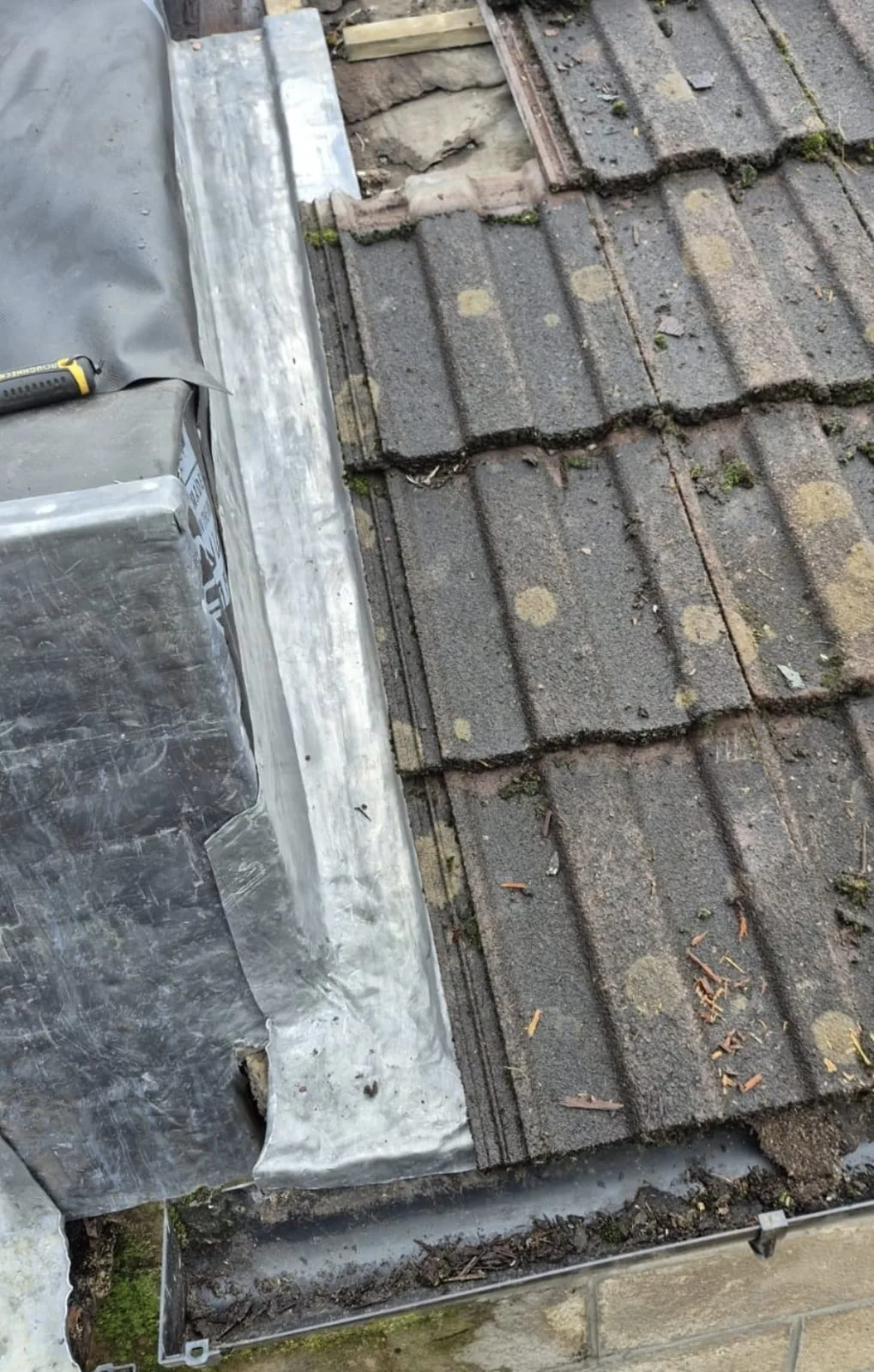
Lead and mortar at these junctions are often the first things to fail. Cracked mortar fillets get replaced with properly dressed lead, and lead that has split through age or poor fixing is renewed so it can move with the seasons instead of tearing. The photo at the top of this page shows exactly that kind of flashing work in progress.
Chimney, ridge and flashing repairs
Some faults need more explanation than a bullet point allows. Stacks with eroded joints or a cracked mortar collar are covered under chimney repointing and flaunching. Loose caps along the top of the roof are explained on ridge and hip tile repairs, including when a mechanical fix is worth it. Leaks where the roof meets a wall, dormer or valley are covered by lead flashing and valley repairs, and slipped or broken slates by slate roof repairs. Each page sets out the signs to look for from the ground and how the work is carried out, so you can describe the problem clearly when you call.
How a repair is handled
It starts with a conversation about what you have noticed, followed by a look at the roof itself. You will be told what is wrong, what the repair involves and what it will cost before anything is agreed. Richard runs the business himself and stays your point of contact throughout, bringing in trusted subcontractors only when a job genuinely needs more hands.
Swift Roofing carries public liability insurance and works for both homeowners and businesses, typically within about 30 miles of the Glasgow base. If water is already coming through, see the emergency repairs page instead, as same-day call-outs are handled differently.