
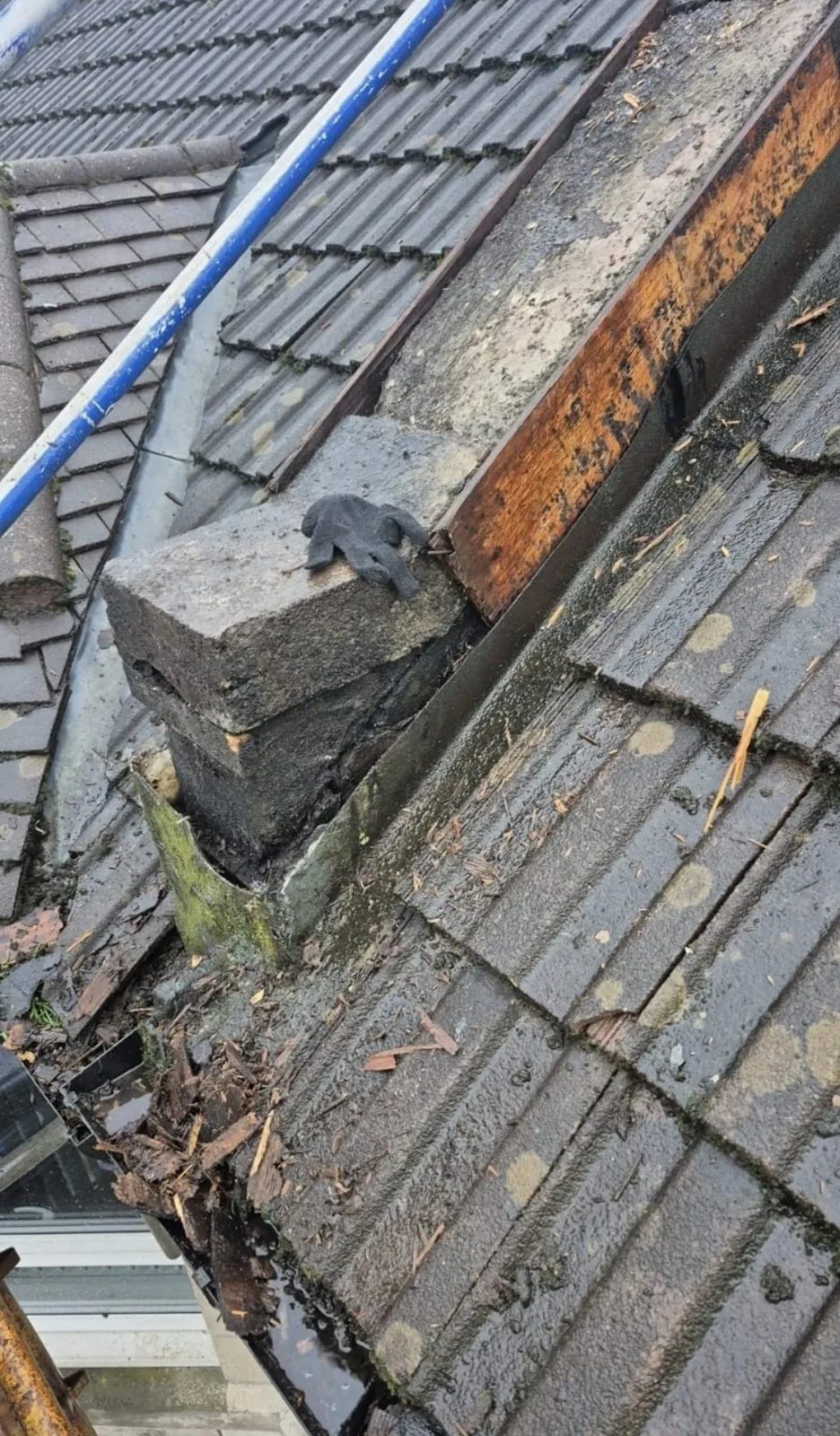
Signs of a leak, and the first things to do
A roof leak rarely announces itself with a steady drip at first. More often it shows as a brown ring on an upstairs ceiling, a musty smell in a cupboard under the eaves, flaking paint around a chimney breast or damp insulation when you next look in the loft. In heavy rain you may hear water running where it should not be.
Once you spot it, put a bucket or old towels under any drip, move electrical items and valuables out of the way, and if a ceiling is bulging keep people out of that room. Take a photo of the stain and note whether it appeared in wind-driven rain or during a steady downpour. Our guide on what to do when your roof is leaking goes through these steps in more detail.
Do not climb onto the roof yourself, especially when it is wet or windy. Wet slates and moss are treacherous, and most leaks are not visible from a ladder anyway.
Where leaks usually start
Water seldom comes in where the stain appears. It finds a gap, runs along a batten, rafter or sarking board and drops wherever gravity takes it. These are the culprits found most often on Glasgow roofs:
- Slipped, cracked or missing tiles and slates exposing the felt or boards beneath
- Lead flashings that have split, lifted or lost their pointing at walls and dormers
- Ridge and hip tiles with crumbling mortar or no mechanical fixing
- Chimney stacks with worn flaunching, open joints or poor lead
- Blocked or sagging gutters spilling water back under the eaves
- Flat roof coverings that have blistered, split or pulled away at an upstand
Fixing the cause, not just the stain
Patching the obvious spot can stop a drip for a week and leave the real fault untouched. Richard starts by asking when the leak shows, which room it affects and what the weather was doing. He then works back from the inside to the outside, checking the loft where it can be reached safely and inspecting the roof surface above.
The repair is matched to what is found. That might mean refixing a few slates, rebedding a run of ridge, renewing a section of lead flashing or carrying out chimney repairs to a stack that has been letting water down the breast. On extensions and garages, flat roofing faults are repaired or the covering replaced if it has failed widely.
You are told what has caused the problem and what the repair involves before work goes ahead, and the price is explained at the same time. If there is more than one defect, they are listed in order of importance so you can decide what to do now and what can be planned.
Emergency call-out or planned repair?
If water is pouring in, part of the roof has blown off or a ceiling looks ready to give way, call for an emergency roof repair. Same-day call-outs are offered where the diary allows, and a call-out fee applies. The aim on the day is to make the roof weathertight; a fuller repair can follow if needed.
A slow stain that only appears in the worst weather can usually be booked as a planned repair. That gives time to order matching materials, arrange safe access and pick a dry day, which tends to produce a neater and longer-lasting job.
Not sure which you need? Phone and describe what you can see. Richard will tell you plainly whether it can wait a few days or should be looked at sooner.
Areas covered
Swift Roofing works across Glasgow and Central Scotland, typically within around 30 miles of the city. Richard runs the business as a sole trader and has been roofing since 2002, bringing in trusted subcontractors when a job needs them. Public liability insurance is in place, and both homeowners and businesses are welcome to get in touch.
Lines are open Monday to Friday 07:30 to 17:00, Saturday 07:30 to 16:00 and Sunday 09:00 to 15:00.
Get the leak looked at
Call 07544 695 027 for anything urgent, or send the details through the quote request form with your postcode and a couple of photos of the stain. You can also email contact@swiftroofing.info. The more you can say about when the water appears, the quicker the likely cause can be narrowed down.