Why flat roof prices vary so much
Ask around and you will hear very different stories about what a flat roof repair involved. That is not because roofers are making numbers up. A flat roof on a kitchen extension, a garage or a dormer can hide a lot under its surface, and the work needed depends on what is found once someone looks properly.
This guide does not give figures, because any figure without seeing the roof would be a guess. Instead it explains the things that actually push the price up or down, so you know what questions to ask.
A local split versus a failing covering
The single biggest factor is whether you are dealing with one fault or a roof that is wearing out. A tear from a fallen branch, a joint that has opened up or one blister on an otherwise healthy covering is a contained job. The repair is small and the rest of the roof keeps working.
A covering that is cracked, crazed or blistered across most of its area is different. Fixing one leak simply moves the problem to the next weak spot. At that point the conversation shifts from repair to re-covering, and the cost reflects the whole surface rather than a patch.
The deck underneath
Under the waterproof layer sits a deck, normally timber boards or sheet material on joists. If water has been getting in for a while, the deck may have softened or started to rot. A roof that flexes or feels spongy when walked on is a strong sign.
Wet decking cannot simply be covered over, because a new surface laid on a rotten base will fail early. The damaged section has to be cut out and replaced first, which adds time and materials. How far the rot has spread is often only clear once the old covering is lifted.
Edges, upstands and outlets
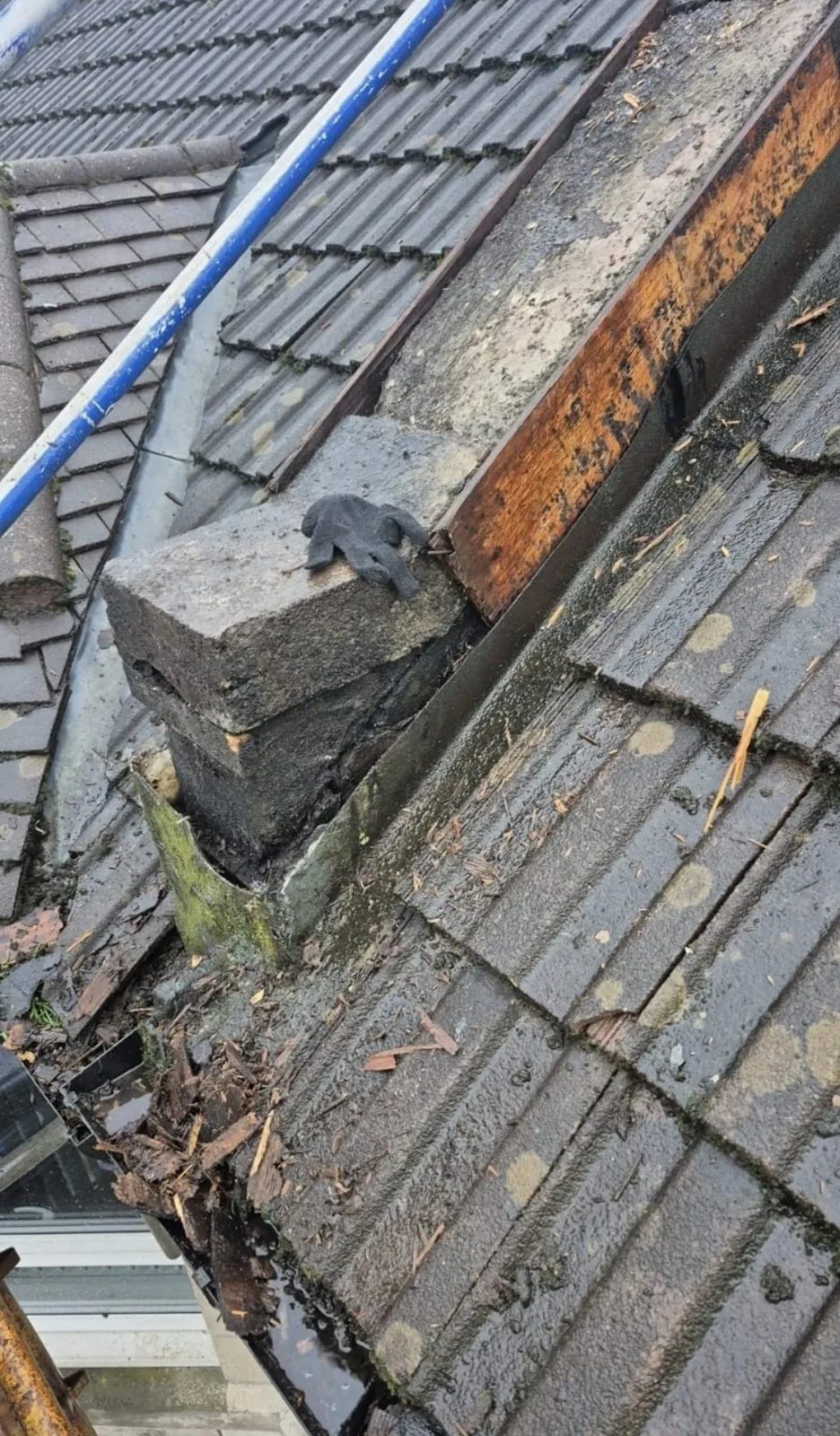
Many flat roof leaks start not in the middle but at the details: where the roof turns up a wall, along the drip edge at the gutter, around a roof light, or at the outlet that drains the water away. These areas move, collect debris and take the most punishment.
Repairing a detail properly can mean lifting flashings, rebuilding an upstand or reforming an outlet, which is fiddlier than repairing a flat area of the same size. A roof with poor fall towards its outlet may also hold puddles, and correcting that adds to the work.
Access and the size of the roof
A small garage roof at head height is quick to reach. A flat roof above a first-floor extension, over a conservatory or behind a parapet may need scaffolding or towers to work on safely. Access is a real cost, and it is the same whether the repair takes an hour or a day.
Size matters in the obvious way, but also in a less obvious one: on a larger roof, it can make sense to deal with several tired areas while access is in place rather than paying to come back later.
Repair or re-cover: how to decide
A useful rule is to look at the roof's history. If it has been patched several times and leaks keep returning, re-covering is usually the sensible spend. If it is the first problem on a roof that is otherwise in good order, a repair is normally fine. The flat roofing page explains how Swift Roofing approaches both repair and replacement on homes, extensions, garages and outbuildings.
If the leak is getting worse quickly or water is reaching electrics, treat it as urgent and look at emergency roof repairs, where same-day call-outs are available depending on availability, with a call-out fee.
Getting a clear price
Before calling, note where the water shows indoors, when it appears (heavy rain only, or all the time) and roughly how big the roof is. Photos help. The leaking roof guide has tips for limiting damage in the meantime. Richard will look at the roof, explain what he has found and give the price before any work goes ahead, and the same applies to pitched roof repairs.