When a new roof makes more sense
Every roof reaches a point where repairs stop being good value. You might have had a roofer out several times in the past few years, each visit fixing one leak only for another to appear elsewhere. On slate roofs the fixings may be rusting through across whole slopes, while older concrete tiles can turn porous and brittle.
At that stage, replacing the covering is often cheaper over the long run than repeated call-outs. A properly installed new roof also gives you the chance to address problems hidden beneath the old one, such as tired battens, failed underlay or poor ventilation in the loft.
- Leaks recurring in different places
- Many slipped or missing slates across a slope
- Tiles that are crumbling, flaking or heavily delaminated
- A visible dip or sag along the ridge or rafters
- Daylight showing through the loft from several points
Scottish slate and traditional roofs
Glasgow's older housing stock and much of Central Scotland is roofed in natural slate, frequently laid on timber sarking boards rather than the battens used in England. That traditional build-up needs to be understood before a roof is stripped, because the sarking is often worth keeping where it remains sound.
When re-slating, salvageable slates can be carefully removed, sorted and refixed with new nails, and any shortfall made up with slate that matches in size, colour and thickness. On listed buildings or conservation areas this approach can matter a great deal for the look of the street. Richard will explain the options for your particular roof rather than offering a one-size answer.
Tiled roofs
Concrete and clay tiles are common on post-war and modern houses. Replacing a tiled roof usually involves stripping the old tiles and battens, laying a new breathable membrane, fixing fresh battens and then the new tiles, with ridges, hips and verges secured to current standards.
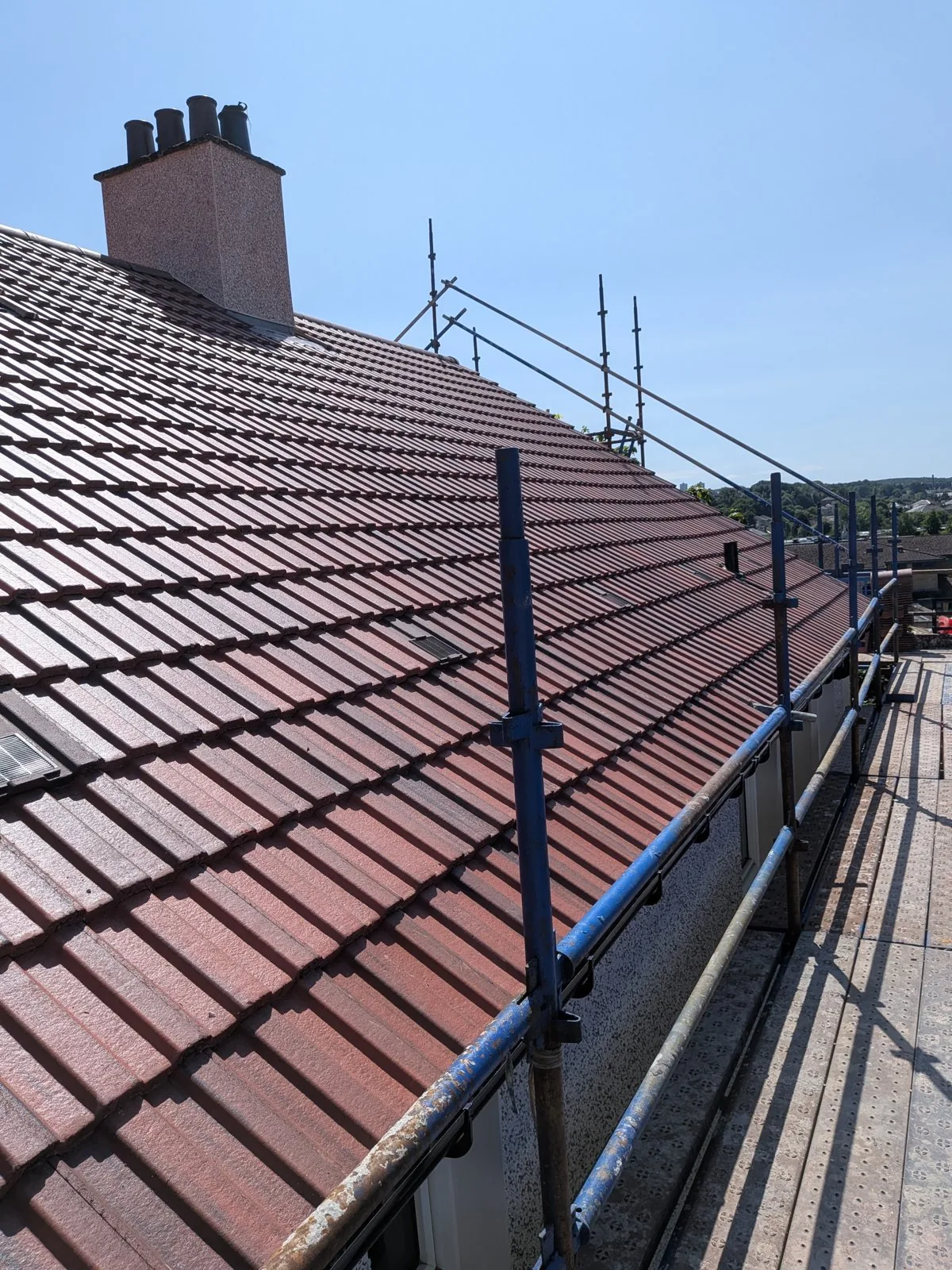
The photos on this site show several of Richard's own tiled re-roofs, including the new roof vents and scaffold protection used during the work. Choosing a tile that suits the property and its neighbours is part of the conversation before anything is ordered.
Slate or tile for your new roof?
Most owners put back the covering the house was built with, but it is worth understanding the choice. Weight matters, because timbers are sized for the original load; appearance matters on a terrace or in a conservation area; and the condition of what is already there decides whether old slates can be reused. The guide to slate vs tile roof coverings sets out those trade-offs, and Richard will talk them through on site.
How a re-roof is organised
It starts with a proper look at the roof and a discussion about what you want from it. Once the scope is agreed, scaffolding goes up to give safe access and protect the property. The old covering comes off in sections, the structure beneath is checked, and the new roof is built up methodically, so nothing is left open overnight.
Details such as chimneys, valleys, abutments and skylights are given particular care, as these are where leaks most often begin. Gutters, fascias and soffits can be renewed at the same time while the scaffolding is up, which avoids paying for access twice.
Who you will be dealing with
Swift Roofing is a sole-trader business run by Richard, whose slogan is Roofing since 2002. He remains your contact throughout and brings in trusted subcontractors when a larger roof needs extra hands. The business holds public liability insurance and takes on re-roofing for homeowners and businesses within roughly 30 miles of Glasgow.