Why a website cannot give you an honest number
Searching for the cost of a new roof turns up a lot of averages, but those figures rarely describe your house. Two homes on the same street can need very different work once the roof is inspected: one may have sound timbers and good access, the other rotten sarking and a chimney stack that needs rebuilding.
Swift Roofing does not publish standard prices for that reason. What follows is a plain explanation of what goes into the cost, based on how a re-roof is actually carried out. Once Richard has seen the roof, he can price the specific work it needs.
Roof size, shape and pitch
The area of the roof is the obvious starting point, since it determines how much material and labour is involved. Shape matters nearly as much. A simple gable roof with two plain slopes is quicker to cover than a hipped roof with valleys, dormers and several changes of direction, because every junction has to be cut and weathered by hand.
Steeper pitches can take longer to work on safely and may need extra edge protection. Very shallow slopes, on the other hand, limit which tiles or slates are suitable at all.
Slate or tiles
Natural slate is the traditional Scottish roof covering and is still common across Glasgow and Central Scotland. It is a premium material and every slate is holed and nailed individually, which takes skilled time. Where the existing slates are in good condition, reusing them and topping up with matching stock can offset part of that cost.
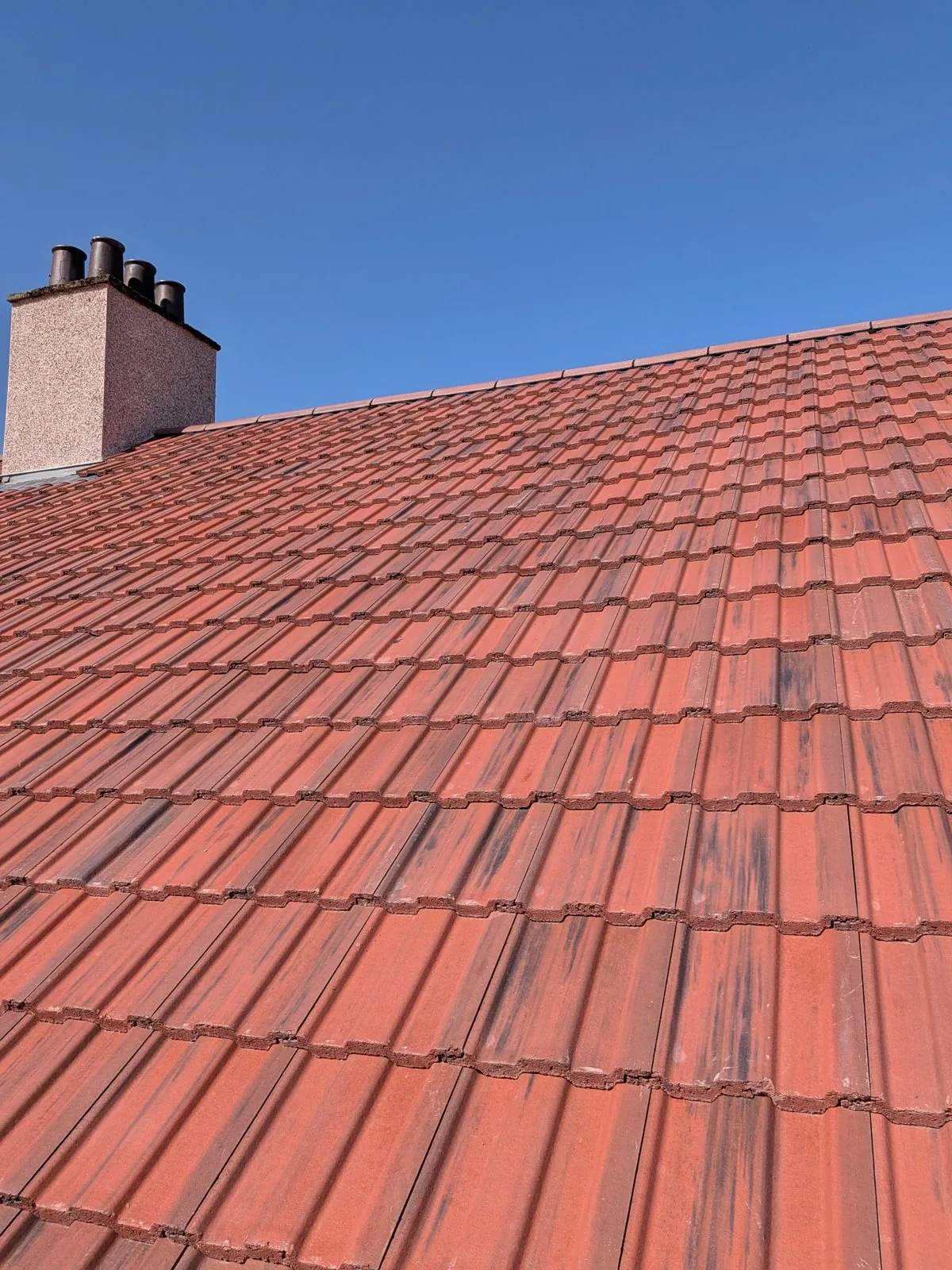
Concrete tiles are larger and faster to lay, so tiled roofs generally involve less labour per square metre. Clay tiles sit somewhere in between. The right choice depends on the age and style of the building, the neighbouring roofs and, in conservation areas, what the council will accept.
Scaffolding and access
Almost every re-roof needs full scaffolding with edge protection. Its cost depends on the height of the building, how many sides need covering and how easy the ground is to work from. A terraced house with a narrow pavement, a tenement over shop units or a property on a steep hill all present different access challenges.
Where a scaffold has to stand on a public footpath, a permit from the council may be needed. Skips and waste removal for the old roof covering are also part of the overall picture.
- Building height and number of elevations
- Ground conditions and space for the scaffold
- Permits for pavements or shared land
- Removal and disposal of the old roof
What lies beneath the old roof
The biggest unknown is the condition of the structure under the covering. Sarking boards, battens and rafter ends can hide rot that only becomes visible when the old slates come off. Replacing decayed timber adds to the job, so a good roofer will explain this possibility at the outset and agree with you how any extra work will be handled.
Chimneys, lead work, ventilation and insulation upgrades also influence the final figure, as does any roofline work you choose to add while the scaffold is up.
Getting a price you can trust
Ask for a written breakdown that states the covering, underlay, timber allowance, leadwork and access included. That makes it easier to compare quotes on a like-for-like basis. Swift Roofing works on homes and business premises across Glasgow and within roughly 30 miles, and Richard is happy to explain every line of a quote.