Why chimney stacks let water in
A chimney is the most exposed part of almost any house. It pokes above the roofline, catches wind-driven rain from every direction and rarely gets looked at until something shows up indoors. Brown staining on a chimney breast, a damp smell in an upstairs bedroom or wet patches in the loft beside the stack are the usual first signs.
Water normally finds its way in through one of three routes: weathered mortar joints in the brickwork or stone, a cracked mortar collar around the pots at the top, or the lead where the stack passes through the roof covering. Each needs a different fix, which is why the first job is working out which route the water is really taking.
Repointing tired mortar joints
Mortar is meant to be the softer, sacrificial part of a wall, and on a chimney it wears faster than anywhere else. Once the joints have eroded back from the face, rain sits in the gaps and soaks deep into the masonry, and frost then forces the damage further each winter.
Repointing means raking out the loose, failed mortar to a sound depth and filling the joints with fresh material that suits the stack. On older stone and brick chimneys in Glasgow, the mix matters: an overly hard mortar can trap moisture and damage the surrounding masonry, so the material is chosen with the building in mind.
Flaunching: the mortar collar at the top of the stack
The flaunching is the bevelled cap of mortar that holds the chimney pots in place and sheds rain off the top of the stack. It takes the full force of the weather, and once it cracks, water drains straight down into the brickwork and the flue.
Loose or split flaunching is cut away and rebuilt, with the pots bedded securely so they cannot rock in a gale. It is a small area of work, but it protects everything beneath it, and a loose pot is a hazard to anyone below.
Chimney lead flashings and soakers
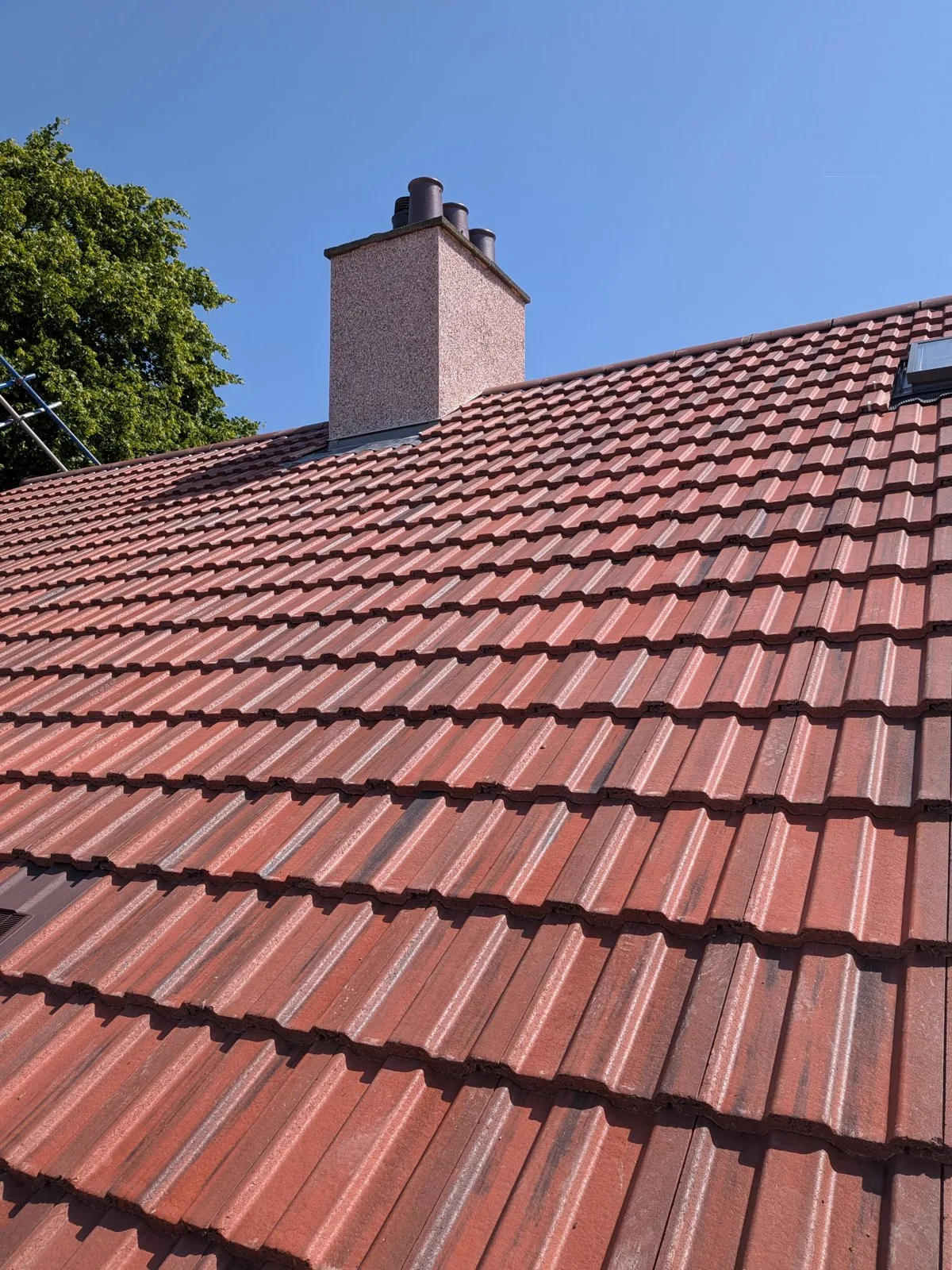
Where the stack meets the slates or tiles, lead is dressed around it to keep the junction watertight. On the sides you will usually find stepped flashings tucked into the mortar joints, with soakers lying under the roof covering; at the front there is an apron, and behind the stack a small back gutter.
Lead that has split, slipped out of its joint or been replaced at some point with a cement fillet is a very common source of leaks. Lead around chimneys is one of the repairs listed on the main roof repairs page, and junctions where a roof meets walls and dormers are covered in more depth under lead flashing and valley repairs.
How Richard assesses access before quoting
Getting to a chimney safely is often the biggest part of the job. A stack on a single-storey extension is a very different proposition from one on the ridge of a three-storey tenement, and the method of access has a direct effect on what the work involves.
Richard looks at the height of the stack, the pitch of the roof and what is around the building before giving a price, and he explains that price before anything goes ahead. Swift Roofing carries public liability insurance and works on homes and business premises, typically within about 30 miles of Glasgow.
When a chimney fault is an emergency
A pot that has come loose in a storm, masonry falling onto a pavement or water pouring through a ceiling beside the stack should not wait for a planned visit. Same-day emergency roof repairs are available depending on availability and location, and a call-out fee applies, so phone directly rather than sending an email.
If the leak is slow and you are not yet sure where it is coming from, the guide on what to do about a leaking roof explains how to limit the damage and what to note down before you call.