
First steps when you find a leak
Discovering water dripping through a ceiling is stressful, but a few calm actions will limit the damage. Start with safety: if the ceiling is bulging, keep everyone out of the room, because saturated plaster can collapse suddenly. Turn off electricity to any circuit where water is close to light fittings or sockets.
Then contain the water. Place buckets, bowls or towels under the drip and move furniture and electrical items out of the way. If you can safely reach the loft, put a container where the water enters there too. Photograph the damage as it happens, since your insurer will usually want to see it.
- Keep away from sagging ceilings
- Isolate electrics near the water
- Catch the drips and protect belongings
- Take photos for your insurance claim
- Do not climb onto the roof yourself
Why roofs leak in heavy rain
Many people notice that their roof only lets water in during the worst downpours. That is a strong clue. In ordinary rain, a slightly displaced slate or a hairline crack may shed water well enough. When rain is heavy or driven sideways by the wind, those small gaps are overwhelmed and water is forced underneath.
Valleys and gutters that are partly blocked can also overflow in a cloudburst, pushing water back under the roof edge. Because this happens only in certain conditions, the leak can be maddeningly intermittent, which makes a proper inspection all the more worthwhile.
The most common causes
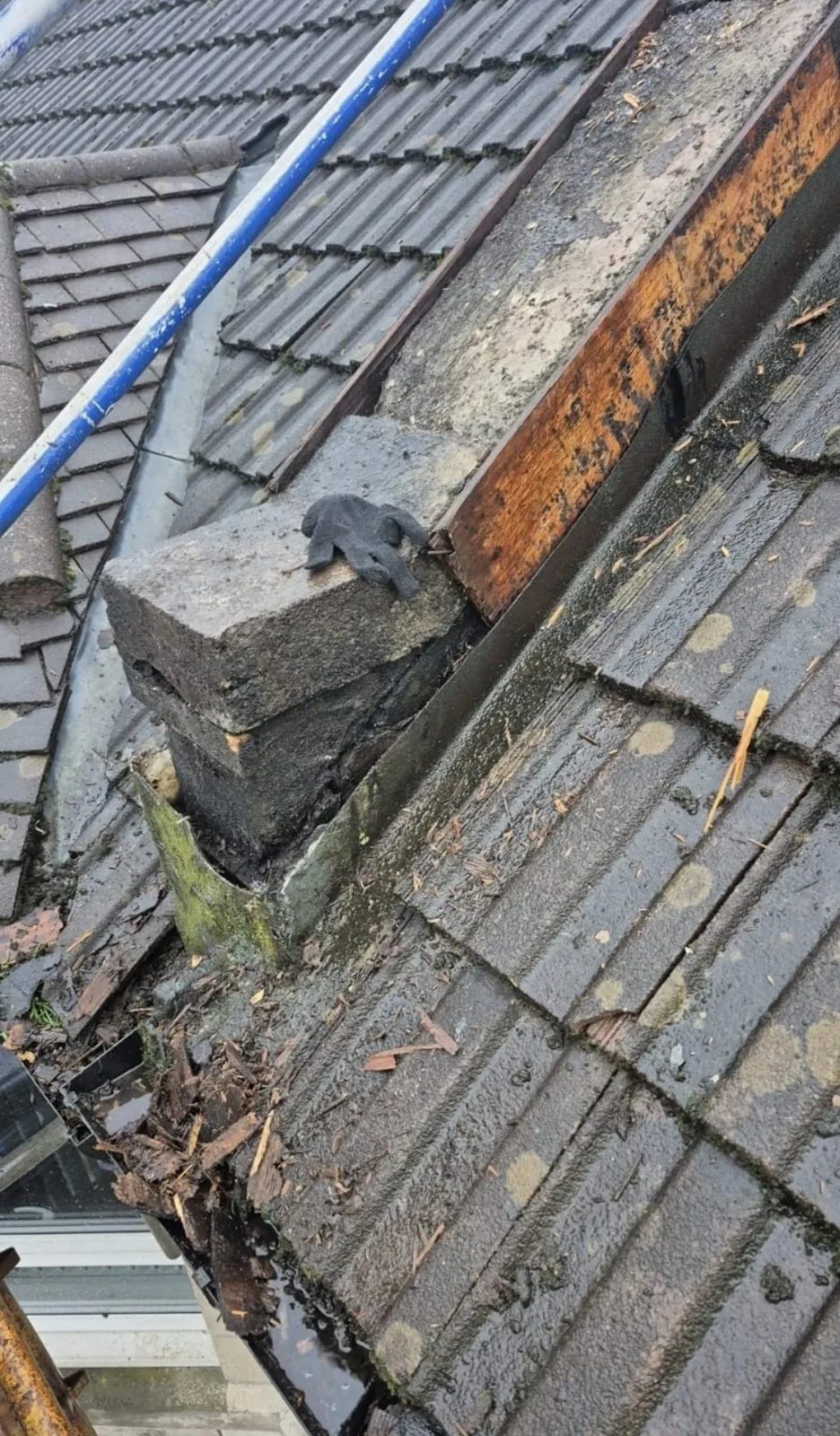
On pitched roofs, the usual suspects are slipped or cracked slates and tiles, rusted nails letting slates slide, failed lead flashings around chimneys and walls, and cracked mortar on ridges. Chimney stacks themselves can let water in through worn pointing or a damaged cope.
Water often travels before it shows. It may run along a rafter or the top of a wall and appear a metre or more from where it actually entered. That is why the stain on the ceiling is only a starting point for finding the real source.
Flat roof leaks
Flat roofs have their own weak points. Membranes split as they age and are exposed to sun and frost, edges lift where trims have loosened, and the upstands where the roof meets a wall are a frequent failure point. Outlets clogged with leaves cause water to pond, and standing water finds any small defect.
If your flat roof leaks after every rainfall, or the surface feels soft underfoot, the deck beneath may already be affected. The flat roofing page explains when repair is enough and when replacement is the better long-term fix.
Emergency or planned repair?
Treat it as an emergency if water is actively entering a living space, threatening electrics, or the roof has suffered obvious storm damage. In those cases, phone for a same-day call-out, bearing in mind that a call-out fee applies. If you have spotted an occasional stain, a slipped slate visible from the street or damp in the loft after a storm, a planned repair is usually the sensible choice and can be scheduled for a dry day.
Swift Roofing covers homes and business premises in Glasgow and Central Scotland, generally within around 30 miles. Richard can advise on the phone which category your situation falls into.